← Kernalite University · All articles
How to Estimate Repair Costs for Wholesale Properties Accurately
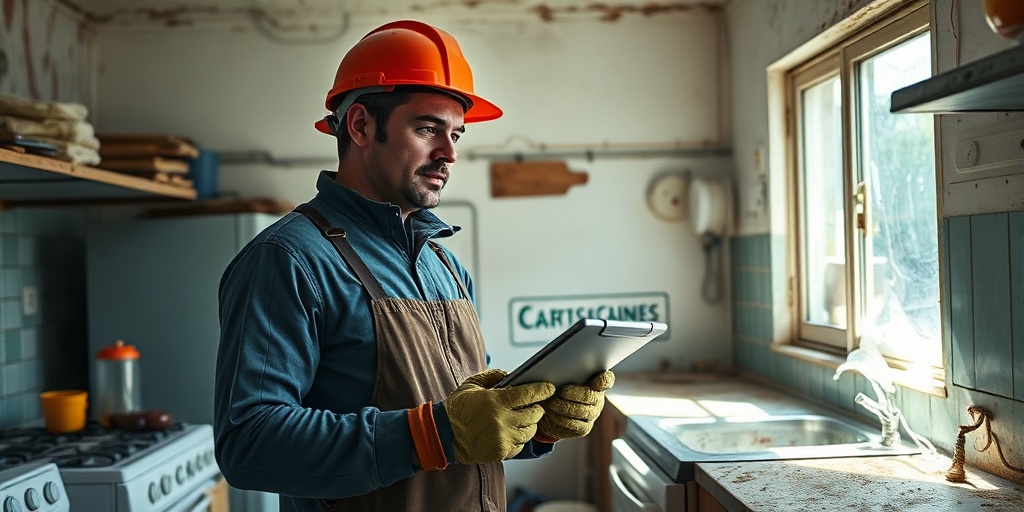
You need to know how to estimate repair costs for wholesale properties accurately, and you need to know it fast. Forget the fluff; here's the direct approach to assessing a property's rehab needs so you can make profitable offers and move deals quickly.
The Quick Scan: Rules of Thumb and Initial Filters
Before you spend hours on a property, you need a rapid assessment. This isn't about pinpoint accuracy; it's about filtering out the obvious money pits and identifying potential deals worth a deeper look.
The fastest way to get a ballpark figure is the 'per square foot' method. This is a rough guide, not gospel, but it helps you categorize properties quickly:
- Light Rehab ($10-$20/sq ft): Cosmetic updates only. Think paint, carpet, minor kitchen/bath refreshes. The house is structurally sound, systems are functional.
- Medium Rehab ($20-$40/sq ft): More extensive updates. New kitchen, bathrooms, flooring throughout, possibly some window replacement, minor electrical/plumbing upgrades. Systems are older but functional or need minor repairs.
- Heavy Rehab ($40+/sq ft): Gut job. New roof, foundation work, HVAC, electrical, plumbing, full kitchen/bath remodels, possibly layout changes. This is a property that needs everything.
To use this, you'll need the property's square footage. You can often find this using online tools for property valuation. Multiply the square footage by the low and high end of your estimated range. For example, a 1,500 sq ft house needing a medium rehab might be $30,000 to $60,000.
This method is a starting point. It's a filter. If your numbers don't make sense even with this rough estimate, move on. Don't fall in love with a deal that can't pencil out from the jump.
Your Systematic Walkthrough: How to Estimate Repair Costs for Wholesale Properties Accurately
Once a property passes the quick scan, it's time for the boots-on-the-ground assessment. This is where you get granular. Your goal isn't to be a licensed contractor, but to identify all major deficiencies and estimate their impact. Bring a checklist, a camera (your phone is fine), and a notepad.
Focus on the 'Big Ticket' items first. These are the systems that will eat your budget alive if you miss them.
- Roof: When was it last replaced? Look for missing shingles, sagging, water stains on ceilings inside. A typical asphalt shingle roof can last 15-25 years. If it's old or damaged, budget for a full replacement (often $8,000-$20,000+ depending on size and pitch).
- Foundation: This is critical. Look for large cracks (especially horizontal ones) in the foundation walls, uneven floors, doors/windows that don't close properly, or bowing walls in the basement. Foundation issues can range from minor crack repair ($500-$2,000) to major structural work ($10,000-$50,000+).
- HVAC (Heating, Ventilation, Air Conditioning): Check the age of the furnace and AC unit. Do they turn on? Listen for strange noises. An HVAC system typically lasts 10-20 years. A full replacement can be $5,000-$15,000+.
- Electrical: Open the electrical panel. Is it old (e.g., fuse box instead of circuit breakers)? Are there exposed wires? Is it knob and tube wiring (common in older homes)? Upgrading a panel can be $1,500-$4,000; rewiring an entire house is significantly more ($10,000-$30,000+).
- Plumbing: Look for leaks under sinks, around toilets, and at the water heater. Check the age of the water heater. Are there signs of galvanized or polybutylene pipes (both are problematic)? Repiping can be $5,000-$20,000+.
Once the major systems are assessed, move to the interior and exterior finishes:
- Kitchen: Cabinets (reface or replace?), countertops (laminate, granite, quartz?), appliances (new package?), flooring.
- Bathrooms: Vanities, toilets, showers/tubs (reglaze, replace?), tile work, fixtures.
- Flooring: Is it salvageable hardwood? Does carpet need replacing? Are there subfloor issues (squeaks, soft spots)?
- Walls & Ceilings: Drywall damage, cracks, water stains, paint condition.
- Windows: Single pane? Broken seals? Drafty? Replacement can be $300-$800 per window.
- Exterior: Siding (power wash, paint, replace?), exterior paint, gutters, landscaping (overgrown, drainage issues).
For each item, assign a cost. Use a simple spreadsheet. Don't forget demo costs for removal of old materials. You can build a cost database over time by tracking local contractor prices for common jobs. This systematic approach, combined with a good understanding of local costs, will significantly improve your accuracy.
Beyond the Visual: Getting Professional Eyes and Accounting for the Unknown
Your walkthrough is good, but it's not a substitute for a professional. For properties with significant 'Big Ticket' issues, or if you're unsure, it's wise to get a contractor's opinion.
- Contractor Bids: For major repairs (roof, HVAC, foundation), get 2-3 bids from reputable local contractors. This validates your estimates and gives your cash buyers confidence. Even if you're not doing the rehab, your buyers will appreciate accurate numbers.
- Specialized Inspections: If you suspect mold, termites, or serious structural issues, a specialized inspector is a small investment that can save you a fortune.
Now, for the part most wholesalers hate but absolutely need: Contingency.
No matter how good you are, you will miss things. There will be unforeseen issues. Budget 10-20% of your total estimated repair costs as a contingency. This isn't 'extra' money; it's a necessary buffer. A $50,000 rehab should have a $5,000-$10,000 contingency built in.
Don't forget Permits. Many significant repairs (structural, electrical, plumbing, roof) require permits. These cost money and, more importantly, time. Factor them into your timeline and budget.
Finally, consider Holding Costs. While you're wholesaling, your buyer will be holding the property during rehab. This includes property taxes, insurance, utilities, and loan interest (if applicable). While not a direct repair cost, it impacts your buyer's profitability and thus, your Maximum Allowable Offer (MAO). An accurate repair estimate is foundational to a solid MAO.
Streamlining Your Repair Estimation with Technology
In today's fast-paced market, efficiency is king. You can't afford to be bogged down by manual processes. Leveraging the right technology can significantly streamline your repair cost estimation and overall deal flow.
Imagine you're driving for dollars with GPS route tracing and house tagging. You spot a distressed property. With a mobile app, you can immediately tag the house, snap photos of potential repair issues, and add quick notes right then and there. This eliminates scribbled notes and forgotten details.
A robust CRM, like Kernalite, allows you to:
- Centralize Property Data: Keep all your photos, notes, and initial repair estimates tied directly to the property record. No more digging through camera rolls or scattered spreadsheets.
- Manage Contractor Relationships: Store contact information for your trusted contractors, track their bids, and even set up automated follow-ups to ensure you get estimates back promptly.
- Automate Workflows: Once you've identified a property needing bids, trigger a workflow to automatically send emails or SMS messages to your preferred contractors, requesting estimates for specific repairs.
- Unified Communication: Use a unified inbox to manage all communications with contractors, sellers, and buyers – whether it's SMS, email, or even webchat – ensuring nothing falls through the cracks.
By integrating your repair estimation process into your CRM, you create a seamless workflow from lead generation to closing. This not only makes your estimates more accurate but also frees up your time to focus on what you do best: finding and closing deals. A good CRM for real estate wholesalers, especially one under $100 per month, can be a game-changer for your efficiency and profitability.
Accurate repair cost estimation is a skill honed through practice. Start by consistently applying a systematic walkthrough to every property you evaluate. Build a local network of reliable contractors whose bids you can trust. And most importantly, always factor in that contingency. The more properties you assess, the better your eye will become, and the more confident you'll be in your offers. Don't just read this; go out and apply it on your next potential deal.
Common questions
Why is accurate repair cost estimation crucial for wholesalers?
Accurate repair cost estimation directly impacts your Maximum Allowable Offer (MAO) and ensures you can secure a deal that's attractive to cash buyers, preventing you from overpaying or misrepresenting a property's potential.
What are the 'big ticket' items to prioritize during a property walkthrough?
Always prioritize the roof, foundation, HVAC, electrical, and plumbing systems. These are the most expensive repairs and can quickly derail a deal if underestimated.
Should I always get professional contractor bids for every property?
For initial screening, rely on your experience and rules of thumb. For properties you're serious about putting under contract, especially those with major system issues, getting 2-3 professional bids is highly recommended to validate your estimates and protect your deal.
Run the whole machine for $99/month.
Driving for dollars, skip tracing, the dialer, cash-buyer matching — one CRM, three seats included.
See Kernalite →